

|
Here are just some of the interesting places to
visit in Guatemala:
Ancient Maya Archaeological Sites
**
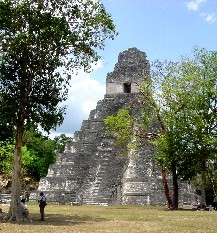
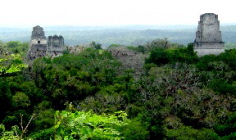
Spectacular Tikal. One of the most famous and beautiful of Maya sites, Tikals massive and steep pyramids (one is
tallest in the Maya World at over 200 feet) loom above the lush jungle of the Peten where one can observe spider and howler monkeys,
coati mundi and numerous bird species such as
toucans, parrots and macaws. At its peak Tikal was
home to an estimated 100,000 people and the site has
over 3,000 structures within a six square mile area.
Well preserved glyphic texts tell of a dynamic
historical record spanning over 1,000 years,
including a very old long-count inscription date of
292 A.D. Tikal
4 night 5 day tour of Tikal, Yaxha, Topoxte
and Uaxactun. Tours from $750 per
person.
** The archaeological site of Uaxactun. Uaxactun (eight stones) got its name from archaeologist Sylvanus Morley who called it that because of an inscription he deciphered on one of the stelae there. Archeologists have determined that the four major structures there were probably used for astronomical studies as they are aligned to the sunrise on equinoxes and solstices. Uaxactun
is located in the 1.65 million hectare Maya
Biosphere Reserve, which is part of the largest body
of intact tropical forest in Central America.
** Lake Yaxhá:. On the banks of its beautiful lagoon is the Maya site of Yaxhá
("Green Water"). You can also take a boat trip
across the lake to the island ruins at Topoxte ("Ramon Tree").
** Visit the ancient Maya sites on the Passion River by
boat such as Aguateca, Seibal, Cancuen, El Peru (Waka),
Dos Pilas and Altar de Sacrificios.
Modern Maya Culture:
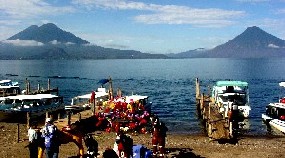
** Lake Atitlán. Atitlán (the Nahualt word for "place of water"), is called Choi Lake ("near the water") by the modern-day Maya. Surrounded by three towering volcanoes (Tolimán, Atitlán and San Pedro), and at an altitude of 1562 meters (4,265 feet) this spectacular lake is home to a multitude of Maya communities who live on its shores. Formed by water build up in a volcanic crater, Lake Atitlán was called by novelist Aldous
Huxley "the most beautiful lake in the world".
** Boat trip on Lake Atitlán to Santiago de Atitlan. Santiago Atitlan is the capital of the Tzutujil
Maya Nation and they believe it is the “belly
button” of the Universe. It has the largest
population of indigenous people of any town in
Central America. Renowned weavers, the women in
Santiago still wear traditional headdresses made
from long lengths of cloth wound repeatedly around
the head. The bustling marketplace in this
village is an excellent place to buy hand-made
textiles directly from local weavers.
**
Numerous small villages on Lake Atitlan such as San Andres Itzapa
which has a shrine to Maximón -- a black-suited
mustached individual who combines the attributes of
St. Simon, Mam (a Mayan god), Alvarado (the
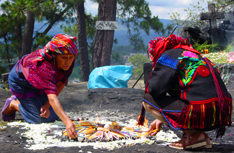
Guatemalan conquistador) and Judas Iscariot.. In the courtyard of the shrine shamans perform healings and people make offerings of cigars and alcohol. Many miracles are attributed to Maximón, everything from physical cures to financial prosperity. On Maximon's
day (October 28th), thousands of believers make the
pilgrimage there to pay homage to this somewhat
enigmatic figure.
** Chichicastenango ("place of the nettles"). Chichi is an important ritual center of the modern day Mayan .
You'll witness Maya religious practices firsthand at Church of Santo Thomás and the most colorful native market in all the Americas. The 400-year old church of Santo Thomás is still used by shamans today and
you'll see how the modern Maya continue the spiritual practices of their ancestors. At the adjacent marketplace K'iche'
Maya of the surrounding region and vendors from all
over Guatemala gather in “Chichi”, one of the
largest trading centers in the Maya area, to buy
sell and trade their wares. A wonderful mix of
richly colored textiles and meticulously carved
wooden ceremonial masks, the scent of copal incense
and candles, the sounds of prayers and singing -- a
truly unique experience.
**
Butterfly and herb gardens of the Atitlan Nature Reserve, where spider monkeys swing in the trees and sometimes, if they take a liking to you, will sit next to you while you enjoy the wonderful natural setting.
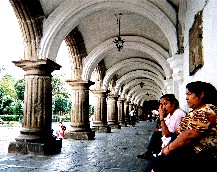
** Antigua. Antigua's historic sites deserve at least one day of exploration. Formerly Santiago de Guatemala, the city was once the third most important Spanish colony in the Americas. For almost 200 years it served as the political and economic center for all lands between Chiapas and Costa Rica. In 1773 the city was destroyed by an earthquake and the capital was moved to Guatemala City. A lovely city with spectacular views of the three volcanoes that surround it (Agua, Acatenango
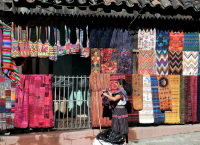
and Fuego -- which is active) has been designated by UNESCO as a World Heritage City. In the markets at Antigua one can find everything from brightly colored and intricately embroidered textiles to
elegant folk art. High quality jade from
nearby mines carved into beads, and exquisitely
worked animal figures and glyphs are just some of
the treasures to be found in Antigua. Side
trips include: Take the trek to active Pacaya
Volcano,
where the live lava flows are spectacular;
Follow that up with a healing soak in mineral hot
springs naturally heated by the volcano; Visit nearby coffee
farms ("fincas") to learn about coffee production
and the history of coffee in Guatemala.
** Guatemala City. Visit some of the
wonderful museums:
-- The National Museum of Archeology and Ethnology: Pre-Hispanic artifacts from Maya sites all over Guatemala.
-- The Popol Vuh Museum: Extensive collection of pre-Hispanic art and folklore section with indigenous clothing and traditional masks.
- The Ixchel Museum of Mayan Costumes: Vast collection of textiles from over 100 Mayan communities dating the 19th century to today.
Let MayaSites Travel Services assist you in planning
your trip to wonderful Guatemala. From hotels
to transportation to tours we are here to help!
|