|
|
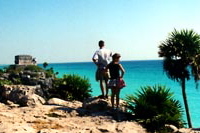
The ancient name of Tulum was Zama, meaning ¨place of the dawning sun¨. How it got this name is obvious as this ancient Mayan city is situated on a cliff which faces east toward the beautiful turquoise waters of the life-giving Caribbean. This is surely one of the most scenically beautiful of all Maya archeological sites.
Tulum was a city of main importance between 1,000-1,600. This was a place for the elite of the Maya world. At first glimpse one might mistake Tulum for an ancient country club, with its beautiful grounds and sweeping views of the sea. If one explores deeper, however, this illusion is disturbed by the presence of a large twenty foot wall that surrounds the site which bespeaks of the need for defense against invaders from both land and the sea. Tulum is one of the first cities that the Spanish Conquistadors encountered in Mexico. It was the only thriving Mayan city they found. Intimidated by its size and grandeur they didn´t stay to visit.
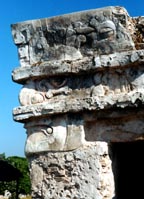
Tulum has a number of interesting structures from the ancient Mayan world. Graceful columns and elegant carvings give one an appreciation for the architectural achievements of the Maya. Some of its main structures are the Temple of the Frescoes, the Castillo pyramid and the Temple of the Diving God. Unique corner masks grace the outside of the Temple of the Frescoes. Inside are fantastic 13th century murals depicting ancient ceremonies. One of the few surviving images of the Mayan goddess of fertility and medicine, Ixchel, can be found here. Red paint still clings to the stucco on the outside of the temple. It is believed that at one time all the buildings in Tulum were painted red.
The Castillo is known more for its scenic location than its size. Although its front facade has all the features of other Mayan temples, its back side seems more like a fortress. Small windows face out toward the sea, providing an excellent lookout post from which to watch for sea faring invaders. Visitors feel compelled to photograph this impressive structure standing regally against a backdrop of the beautiful Caribbean.
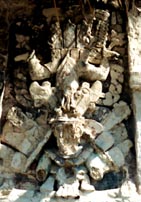
The Temple of the Diving God is so named because it has an unusual figure above the doorway that appears to be diving headfirst to earth. There are many theories about the meaning of these curious carvings which also appear at the Mayan site of Coba but few other sites. They have also been called ¨the bee god¨ or ¨the god descending¨ and have been associated with the planet Venus. It is a popular symbolic motif in the temple doorways at Tulum which contain several of these unique figures.
Perched atop cliffs overlooking the blue Caribbean, Tulum is a favorite among visitors to Cancun and the Riviera Maya. Iguanas bask lazily on rocks in the sun; gentle waves caress the shore. The pristine beach is so beautiful it is almost surreal. It is easy to imagine the ancient Maya landing at this bustling seaport, their canoes filled with trade goods. Savvy visitors bring a bathing suit and and take time for a refreshing and swim and a bit of sunbathing. Here you´ll discover why Tulum is a treasure of the ancient Maya world. |

|